Why You Need a Workout Accountability Partner (And How to Find One)
Willpower is a battery, but accountability is a generator. Learn how to apply the science of body doubling for workouts and get 3 scripts to find a reliable workout partner today
Are you someone who vows every year to go to the gym, exercise more regularly, lose weight and improve your fitness quotient – only to abandon all resolve a few months later? If so, don’t feel bad. Personal fitness requires consistency and commitment, and it’s not easy to keep these up all on your own.
But if now, you’re thinking the time to wait has long passed and you need to take your fitness seriously, why not do something different this time and team up with a workout / fitness accountability partner to help you stick to your goals?
Most people don’t fail at fitness because they lack knowledge. They fail because they lack accountability. No one is checking in, no one is tracking progress, and no one notices when workouts quietly disappear from the workout schedule.
This is where a workout accountability partner becomes incredibly beneficial.
An accountability partner will not just ensure you are actually working out and exercising but also keep you motivated when you feel stuck and want to quit. As a bonus, they could also give you tips on how to boost your fitness techniques and get to your goals quicker and better!
In many ways, this works through social accountability and body doubling. Simply exercising alongside a workout partner, workout buddy, or gym buddy—either in person or through virtual groups—makes it harder to quit and easier to show up.
Finding the right accountability partner can feel challenging. Fitness level, communication style, shared commitment, and similar fitness goals all matter. But once you know what to look for, finding an accountability partner becomes much easier.
If you want this time to be different, the solution may not be more motivation. It may be the right partner.

The Science of Workout Accountability Partners: Why You Need One
A workout accountability partner can dramatically improve fitness progress. Accountability partnerships help you stay consistent with your workout routine, stay motivated when challenges arise, and follow through on long-term health goals like strength training or weight loss.
An accountability partnership works because it’s a two-way street. You’re no longer working toward your own goals in isolation. Someone else is invested in your progress.
Research supports this. The Köhler Effect shows that people put in more effort when their performance affects someone else. Mirror neurons also play a role—watching others exercise increases motivation, focus, and physical activity.
This is why accountability partners don’t just encourage. They create structure, shared commitment, and clear expectations that help you stay consistent even when motivation fades.
3 Types of Workout Accountability Partners: Which One Do You Need
Not all accountability partners are the same. The right choice depends on whether you struggle more with consistency, focus, or results. It's just the presence that makes accountability so powerful.
Type 1: The Peer (Friend)
A peer accountability partner is usually a friend, coworker, or family member who agrees to work out with you or check in on your fitness journey. This option feels easy and familiar, and it can make fitness more enjoyable because you’re doing it with someone you already trust. Sharing goals and progress with a friend can boost motivation, especially in the beginning.
That said, peer accountability comes with a downside. Because the relationship is casual, it’s easy to skip workouts without consequences. If one person cancels, the other often does too. Over time, accountability can fade, especially when life gets busy or motivation drops. This setup works best if both people already have decent habits and need light support.
Type 2: The Body Double (Stranger)
A body double is someone you don’t know personally but work out with at the same time - often through fitness apps, virtual groups, or workout platforms.
This setup is powerful for staying focused and maintaining a workout schedule. There’s no emotional baggage, just presence and social accountability. Many people find it easier to stay accountable to strangers than friends.
However, body doubling offers little personal connection and almost no feedback or guidance, so it’s not ideal if you want coaching or deeper support.
Type 3: The Enforcer (Professional)
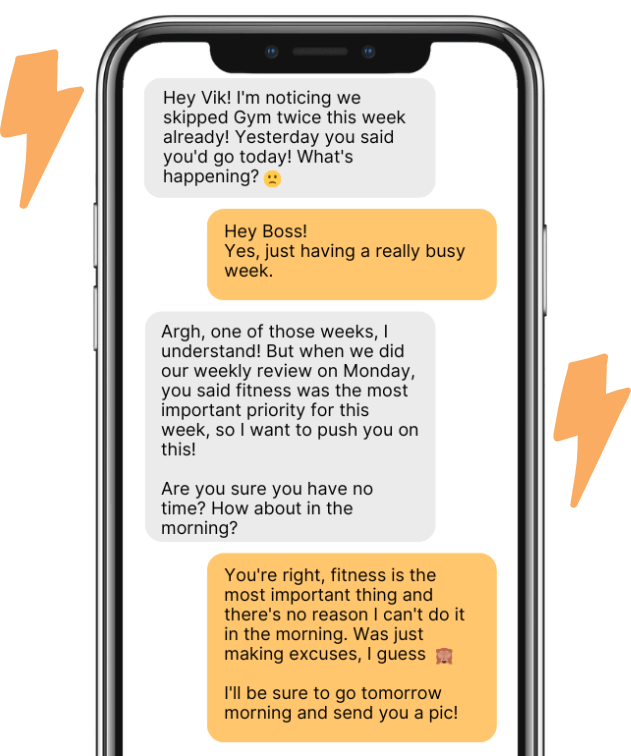
A professional accountability partner, like a fitness coach or accountability service like Boss as a Service, offers the strongest structure.
Clear communication, regular check ins, constructive feedback, and follow-through make this the most effective option for people who struggle to stay committed or have repeatedly fallen off routines.
How to find Fitness Accountability Partners
The easiest way to find workout accountability is to join a gym or group fitness classes for yoga, aerobics or Zumba, which offer a built-in body doubling system and instructor guidance. Working with a fitness coach or a knowledgeable workout accountability partner at the gym can help ensure your safety and provide form correction, reducing the risk of injury during exercise.
But if you want to go one-on-one, follow these three scripts:
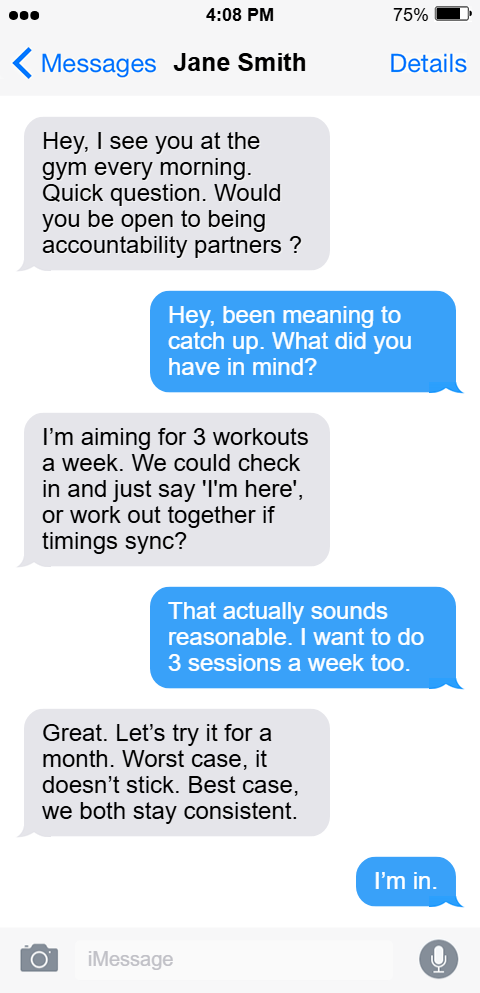
Just Ask Someone
The simplest way to find a workout accountability partner is to just ask. Start with people already around you: a family member, a friend, or even someone you see regularly at the gym. You don’t need a formal setup or a dedicated app to get started. A quick conversation or message is often enough to turn a shared intention into accountability. Even a casual gym acquaintance or a stranger who works out at the same time as you can become a reliable partner for staying consistent and increasing your physical activity. A simple ask can turn mutual support into a successful accountability partnership.
Check Online Communities
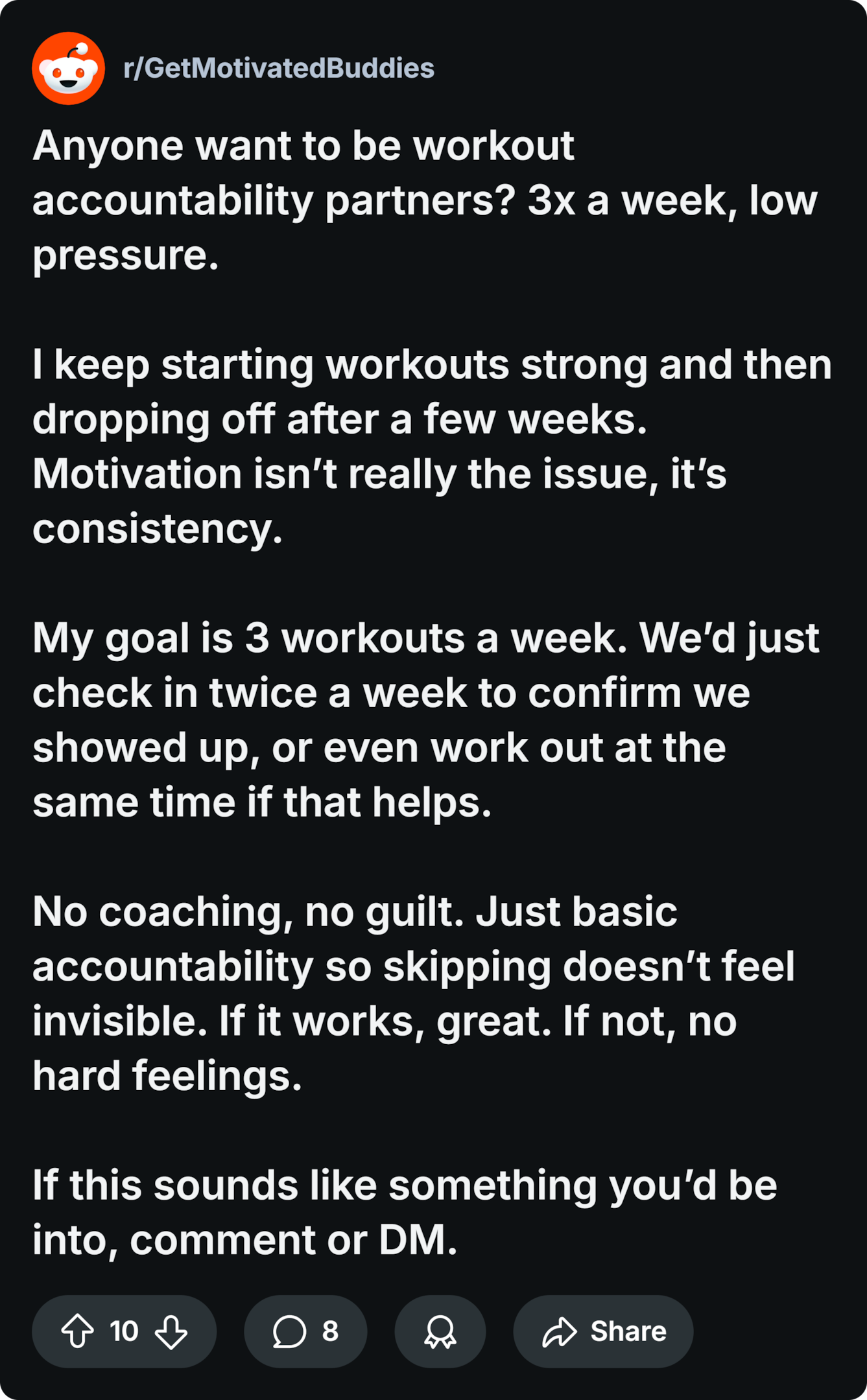
Reddit, Facebook and other social media platforms now have support groups and chat rooms online with hundreds or even thousands of people involved with goals to lose weight or exercise looking for advice, support and encouragement. These spaces are ideal for accountability partner finding, especially if you prefer virtual groups.
Prefer an accountability app instead of a person? Read our list of Best Workout Accountability Apps
Sign up to Boss as a Service
🙌 The quickest and easiest way to find an accountability partner who's sure to keep you on track is to join Boss as a Service!
Boss as a Service removes friction from finding the right accountability. You’re matched with a professional accountability partner who helps you stay consistent, motivated, and accountable—without relying on friends who may lose momentum.
You set specific fitness goals, schedule regular check-ins, and get structured follow-up that helps you stay consistent, motivated, and focused. If you’ve struggled to stick to exercise plans on your own, a professional fitness accountability partner can provide the external structure needed to build lasting habits and see real results.
Setting Up The Partner Contract
So you've found a workout accountability buddy! Before you start celebrating, remember this: most accountability partnerships fail because expectations are vague. Before you start, agree on a simple contract. It doesn’t need to be formal, but it does need to be clear.
Rule 1: Choose the Method (Text or Call)
Decide upfront how you will check in. Text works best if you want something fast and low-effort. Calls or voice notes add more pressure and are harder to ignore, but require more coordination.
Pick one primary method and stick to it. Open-ended communication usually leads to missed check-ins.
Example:
“We’ll check in by text every Monday and Thursday after our workouts.”
Rule 2: Set a Flake Tax
Accountability only works when skipping has a consequence. Agree on a small penalty for missing a workout or check-in without notice.
It doesn’t need to be serious. It just needs to be uncomfortable enough to matter.
Example:
“If I miss a workout, I owe you $5.”
“If I skip a check-in, I buy the next coffee.”
Rule 3: Commit to a Short Duration
Avoid long-term promises. Start with a short trial, ideally two weeks.
Short commitments reduce pressure, lower flakiness, and make it easier to show up consistently. If it works, you can always extend it.
Example:
“Let’s try this for two weeks and reassess.”
Goal Setting with Your Accountability Partner
Once the contract is set, agree on clear, specific goals. Focus on behaviors, not outcomes. For example, committing to three workouts per week is more effective than aiming to “get fitter.”
Your goals don’t have to be identical, but they should be compatible. Share what you’re working toward, define what “done” looks like for each week, and make success easy to verify during check-ins.
Clear goals give your accountability partner something concrete to hold you to.
Handling Common Challenges
Even good accountability setups see a few common challenges. Schedules change, energy dips, and motivation drops. When that happens, adjust the system instead of quitting. Change workout times, simplify goals, or reduce frequency temporarily. Keep communication honest and practical. Missed workouts should lead to discussion, not guilt.
If something isn’t working after the agreed duration, revisit the contract and tweak one rule at a time.
Maximizing the Benefits of the Partnership
To get the most out of your accountability partnership, keep it simple and consistent. Show up when you said you would. Respond to check-ins on time. Acknowledge effort, not just outcomes.
Celebrate small wins, even boring ones like “showed up when I didn’t feel like it.” That’s where habits are built.
When accountability is clear, short-term, and structured, consistency becomes easier—and fitness stops feeling like something you keep starting over.
Final Thoughts
An accountability partner is one of the most effective ways to stick to your fitness goals. Not because it boosts motivation, but because it adds structure, visibility, and follow-through. When someone else is paying attention, consistency becomes easier.
Whether it’s a friend, a body double, a professional enforcer, or a workout group, accountability works best when expectations are clear. Set simple goals, decide how you’ll check in, add light consequences for flaking, and commit for a short time.
You don’t need more willpower. You need a system that makes showing up the default.