Top Group Accountability App: Friends vs. Teams vs. Couples
Looking for a group accountability app? Whether you need friendly competition (Strava), team management (Tability), or a shared goal with a partner, here are the top tools ranked
If you’ve been researching accountability for a while, you’ve probably heard the same phrase again and again: you don’t have to do it alone. And honestly, that’s true.
When we set goals that feel personal, it’s easy to think accountability should be personal too. If the goal only really matters to you, it can feel like you’re the only one who will stay invested in it. That’s why a lot of people try to rely on self-discipline or personal accountability.
But here’s another way to think about it: What if a group of people, all with their own goals, simply decided to support each other along the way? Everyone is working toward something different, but they still check in, share progress, and keep each other motivated.
That’s basically what social accountability is. Everyone has their own goals, but the group helps each person stay consistent and actually follow through. A simple example is a health group with friends. You might all be following different workout routines or diet plans, but you still check in with each other to track progress: "Did you make it to the gym today?" "Did you log your calorie intake?" Those small check-ins as accountability partners can make a big difference.
Social accountability is not just for personal habits. Sometimes the group already exists. Think about work teams. Teams use meetings, deadlines, and quick messages to make sure everyone is moving forward and doing their part.
If you want to be more intentional about group accountability, the good news is that you don’t have to build the system yourself. There are several apps designed specifically to help groups stay accountable together. Let’s take a look at some of the best accountability apps for groups.

The 3 Types of Group Accountability
Not every group works the same way. The kind of accountability you need usually depends on the relationship between the people involved and the goals you are trying to reach together.
Most group accountability setups fall into three simple categories:
Competition: For friends who want to beat each other
Some people stay motivated when there is a little competition involved. Instead of just checking in on each other, the group turns progress into a friendly challenge. This works well for fitness groups, habit challenges, or productivity goals. Friends might compete on who logs the most workouts in a week, who runs the most miles, or who sticks to their habit streak the longest. Many group accountability apps also use a group streak feature, which tracks the collective progress of the group and motivates everyone to keep up their contributions so the group streak continues.
If your group likes a bit of rivalry, this kind of accountability can work wonders. The goal is still personal progress, but the competitive element makes it more fun and motivating.
Management: For teams that need transparency
In work settings, accountability usually looks a little different. Teams often share a common goal, so what matters most is visibility and coordination.
This type of group accountability focuses on progress tracking, task ownership and clear deadlines. Everyone can see what others are working on, what has been completed, and what still needs attention. Regular updates help keep projects moving and make sure nothing slips through the cracks.
Some teams prefer private groups with invitation-only access and privacy controls, creating a secure space for members to share personal progress and challenges.
Partnership: For couples/duos
Sometimes accountability works best when it is just two people supporting each other. This setup is for workout partners, study buddies, or even couples trying to build healthier habits together.
The structure is simple. You share your goals, check in regularly, and help each other stay consistent. Instead of a group dynamic, the focus is on one-on-one accountability and encouragement.
Once you know which type of group accountability fits your situation, it becomes much easier to choose the right tools to support it.
Best Accountability Apps To Try With Your Groups
Best for Friends (Gamified and Social)
The Vibe: Fun, Competitive, High Dopamine. These apps work well for friend groups who enjoy turning progress into a game. Gamification is a major motivator for some people, as it helps track progress and schedule work. Many group accountability apps also help users organize their to dos, reducing mental clutter and supporting habit formation. Instead of quietly tracking habits on your own, you can see what everyone else is doing and push each other to keep going.
Habitica

Habitica turns everyday tasks and habits into a role-playing game. Instead of simply ticking off tasks, you level up a character by completing them. It is a fun way to make routine goals feel more engaging and turn life into a game with a "party".
Key Features:
- RPG-style task and habit tracking
- Party system where you team up with friends
- Group quests that require everyone to stay consistent
- Rewards, experience points, and character upgrades
Best For: Friend groups who enjoy games and want accountability to feel fun and interactive.
HabitShare
HabitShare keeps things simple. It focuses on shared visibility so your friends can see your habits, streaks, and daily progress for maintaining streaks. The idea is that knowing someone else can see your progress makes you more likely to stick with it.
Key Features:
- Share specific habits with friends
- Visible streak tracking
- Comments and encouragement on habit check-ins
- Simple daily habit logging
Best For: Friends who want light social accountability to stay focused without complicated gamification.
Strava
Strava is one of the most popular fitness tracking apps, especially for runners and cyclists. What makes it powerful for groups is the strong social element. You can follow friends, share workouts, and join challenges together.
Key Features:
- Track runs, rides, and other workouts
- Social feed to see friends’ activities
- Group challenges and leaderboards
- Clubs where members can share and compare progress
Best For: Friend groups who want accountability around workouts, running, cycling, or other fitness activities.
Challenge Hound

Challenge Hound is built around group challenges. Instead of just tracking habits individually, you can create challenges that everyone in your group participates in.
Key Features:
- Create custom group challenges
- Track progress for every participant
- Leaderboards and progress updates
- Easy check-ins for daily goals
Best For: Friend groups who enjoy short-term competitions and shared challenges.
Habitat

Habitat is designed specifically for group habit building. It allows friends to create shared habits and keep each other accountable while working toward similar goals.
Key Features:
- Shared group habits and goals
- Activity feeds showing everyone’s progress
- Streak tracking for the group
- Comments and encouragement from friends
Best For: Friend groups who want to build habits together and stay motivated as a team.
Best for Teams (Work and Projects)
The Vibe: Professional and Outcome-Focused. These tools are designed for teams that need visibility into progress, clear ownership of tasks, and structured goal tracking. Instead of friendly competition, the focus here is on coordination and ensuring everyone is moving toward the same outcomes.
Tability

Tability is built for teams that use OKRs (Objectives and Key Results) to track progress. It helps teams turn big goals into measurable outcomes and keeps everyone aligned on what matters most.
Key Features:
- OKR tracking for teams and organizations
- Weekly progress check-ins
- Dashboards that show how goals are progressing
- Team visibility into priorities and outcomes
Best For: Startups and growing teams that want a simple way to manage OKRs and keep everyone aligned.
Hive

Hive is a project management platform that combines task management, collaboration and reporting in one place. It helps teams track work, assign responsibilities and stay accountable to deadlines.
Key Features:
- Task assignment and project tracking
- Team collaboration and messaging
- Project timelines and progress dashboards
- Automated workflows and reminders
Best For: Remote teams managing complex projects that need both task tracking and team collaboration for performance improvements.
Asana/ClickUp
Both Asana and ClickUp are widely used project management tools that help teams organize work and track progress. What makes them useful for accountability is their "Goals" feature, which connects everyday tasks to larger team objectives.
Key Features:
- Task and project management
- Goal tracking that links work to outcomes
- Team dashboards and progress visibility
- Deadlines, reminders and detailed reports
Best For: Teams that want structured project management with detailed analytics into how daily work contributes to bigger goals.
Squad

Squad is designed to help teams stay accountable through regular check-ins and progress updates. Instead of only focusing on tasks, it encourages team members to share updates and reflect on progress together.
Key Features:
- Regular team check-ins
- Shared progress updates
- Visibility into team goals and milestones
- Simple collaboration and feedback tools
Best For: Teams that want a lighter, check-in based accountability system alongside their regular work tools, instead of added external pressure.
Best for Couples (Duos)
The Vibe: Cooperative, Intimate. These apps are built for two people working together toward shared goals. Instead of competition, the focus is on support, communication and staying aligned.
Official
Have you heard the term "dating intentionally"?. Official takes it a step further. The app focuses on relationship check-ins, shared activities, and small habits that help partners stay intentional about their time together.
Key Features:
- Relationship check-ins and prompts
- Shared date planning tools
- Daily questions and conversation starters
- Progress tracking for relationship goals
Best For: Couples who want to stay connected regularly and plan meaningful time together.
Zeta

Zeta helps couples manage money together. It provides a shared space where partners can track spending, plan budgets, and stay accountable to financial goals.
Key Features:
- Shared budgeting tools
- Expense tracking for both partners
- Joint financial goal planning
- Clear overview of spending and savings
Best For: Couples who want transparency and accountability around shared finances.
stickK

stickK focuses on serious accountability. You set a goal, define what success looks like, and assign someone to hold you accountable. For couples, this can work as a one-on-one system where each partner helps the other stay committed.
Key Features:
- Goal commitment contracts
- Accountability partner check-ins
- Progress tracking and verification
- Optional financial stakes for added motivation
Best For: Couples who want structured, one-on-one accountability for personal or shared goals.
Why Group Accountability Fails (The "Social Loafing" Trap)
Group accountability sounds great on paper. More people mean more motivation, more check-ins, and more support. But sometimes the opposite happens.
One common reason is the Bystander Effect: When many people are present, everyone assumes someone else will take action.
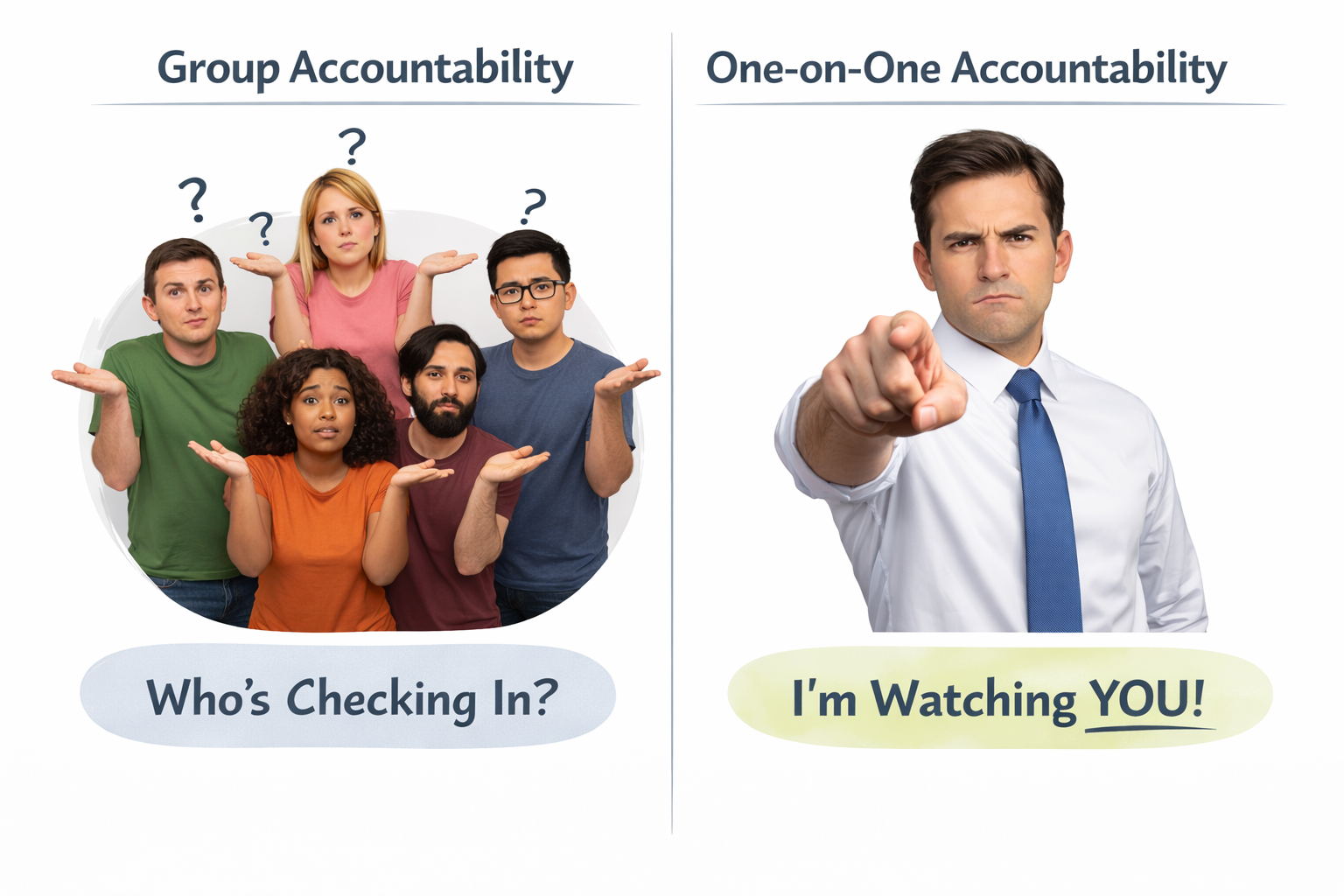
Imagine five friends in a group chat who promised to support each other’s fitness goals. One person stops posting workouts. In theory, someone should check in. But each person thinks the same thing: "Someone else will message them". So no one does. The result? The person slips off track, the group slowly stops paying attention, and the accountability system falls apart.
That’s the social loafing trap. The bigger the group, the easier it becomes for responsibility to disappear.
The Solo Alternative: Boss as a Service
The easiest way to avoid social loafing is to remove the crowd. Groups are great for hype, but bad for consistency. If you want to make sure you cannot hide in the crowd, you need one-on-one accountability.
When there is only one person responsible for checking on your progress, there is no confusion about who should follow up. There is no bystander effect. If you miss a check-in or skip a goal, it is obvious.
That is the idea behind Boss as a Service.
Instead of relying on a group chat to keep you consistent, you have one dedicated person whose job is to track your progress and make sure you follow through. The focus is entirely on you and your goals.
Final Thoughts
Group accountability can be a powerful motivator. Whether it is friends competing in habit challenges, teams tracking shared goals, or couples supporting each other, the right group setup can make progress feel easier and more fun. But groups also have limits. As groups grow, responsibility tends to spread out. The social loafing effect kicks in and people assume someone else will check in or follow up. The key is choosing the setup that makes it hardest for you to quietly fall off track.
Want to learn more about accountability? check out these posts:
The 10 Best Accountability Partner Apps in 2026
Accountability Coaching - Everything You Need to Know (And where Boss as a Service fits in)
Try a commitment device to help you get work done